
In Sierra Nevada, safety on the slopes is paramount, and a good back protector is a piece of equipment often underestimated until it's needed. It's not just about preventing serious injuries in a fall, but about skiing or snowboarding with the confidence of knowing you're protected. A back injury can ruin not only the day but the entire season, and in a dynamic environment like the mountains, unforeseen events are part of the game. Therefore, choosing the right gear is an investment in your well-being and your ability to fully enjoy every descent.
The market offers a wide range of protectors, from the most robust and rigid to more flexible and discreet options. The key is to find the balance between protection, comfort, and freedom of movement. A protector that restricts you or makes you feel uncomfortable is one you'll end up leaving at home. Technological advancements in materials like POC's VPD (Visco-Elastic Polymer Dough) have allowed for the development of protections that adapt to the body and harden only upon impact, offering an effective solution without the bulk of yesteryear.
For this review, we've focused on the POC Spine VPD Air Vest, a model that promises lightness and ventilation, highly valued characteristics in the changing conditions of Sierra Nevada. We've put it to the test during intense days, from early mornings with hard snow to late afternoons with softer snow, passing through windy areas and low temperatures. Our on-slope experience with this vest has allowed us to evaluate its real performance, its fit, and how it behaves under other layers of clothing. Protection is invisible until you need it, but its presence should always be comfortable.
Spine VPD Air Vest
Explora reviewMinimalist and breathable design for maximum comfort.
POC
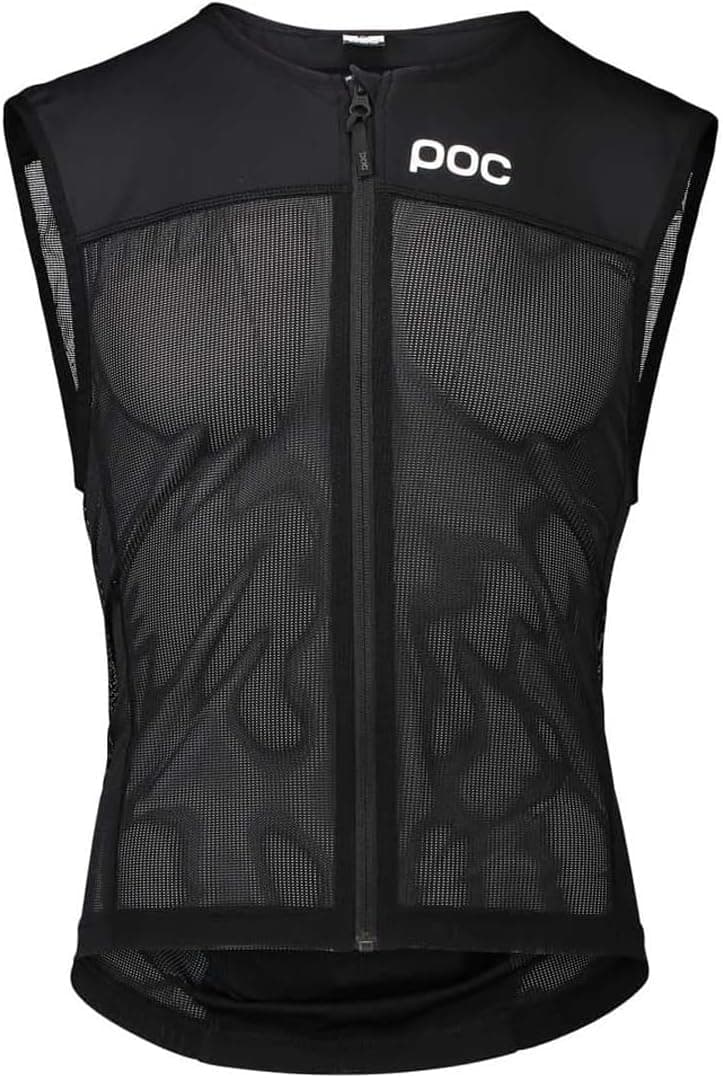
The POC Spine VPD Air Vest is a back protector vest designed to offer excellent protection with minimal weight and maximum ventilation. Ideal for skiers and snowboarders seeking comfort and freedom of movement without compromising safety on the slopes.
Spine VPD Air Vest
POC · 149,95€
Affiliate link. Size and price are confirmed on Amazon.
The POC Spine VPD Air Vest uses VPD (Visco-Elastic Polymer Dough) Air technology, a material that adapts to the body's shape with body heat, providing a custom fit and great flexibility. Most impressively, upon impact, the material instantly hardens to absorb and disperse energy, returning to its flexible state afterward. This means you get robust protection only when you need it, and exceptional comfort the rest of the time. The vest's design is minimalist, with a mesh construction covering much of the torso, ensuring superior breathability.
Comfort is a strong point of this vest. The elastic mesh allows for full freedom of movement, and the back protector itself is thin enough to go unnoticed under a jacket, avoiding the 'robot' effect of other bulkier protectors. It includes an elastic waist strap for additional adjustment and to keep the protector in place, which is crucial for its effectiveness. The front zipper makes it easy to put on and take off. It's an excellent option for those who spend many hours on the snow and value gear that doesn't bother them, allowing them to focus on technique and enjoyment.
Pros
- +Extremely lightweight and breathable.
- +Great freedom of movement due to VPD Air material.
- +Discreet design that fits well under clothing.
Cons
- −Level 1 protection, not the highest available.
- −High price for some budgets.
- −Less robust than rigid protectors for extreme impacts.
| Protection Material | VPD Air (Visco-Elastic Polymer Dough) |
|---|---|
| Certification | CE EN 1621-2 Level 1 |
| Design | Vest with breathable mesh |
| Fit | Front zipper, elastic waist strap |
| Weight | Lightweight |
Spine VPD Air Vest
POC · 149,95€
Affiliate link. Size and price are confirmed on Amazon.
How we assessed it
To evaluate the POC Spine VPD Air Vest, we used it for several weeks in varying snow and weather conditions on the slopes of Sierra Nevada. This included descents on freshly groomed runs, icy patches in the early morning, spring snow in the afternoon, and strong windy days at high altitudes. Our instructors wore it during lessons and personal practice sessions, both skiing and snowboarding, which allowed us to assess its comfort during prolonged periods and under different levels of physical activity. Special attention was paid to breathability, fit with different layers of clothing, freedom of movement, and, of course, the sense of security it provides. No controlled impact tests were performed, but the material's ability to conform to the body and its discreetness under a jacket were evaluated.
What to look for before buying a back protector
Before deciding on a back protector, evaluate several key points. First, the **type of protection**: rigid (hard plates) or soft (flexible materials that harden upon impact, like VPD)? The choice will depend on your skiing/snowboarding style and the level of risk you take. Next, **certification**: look for protectors that comply with CE EN 1621-2 Level 1 or Level 2, with Level 2 offering greater impact absorption. **Breathability** is vital, especially in Sierra Nevada, where the sun can be intense; designs with mesh and ventilation channels are preferable. **Fit** is crucial: it should be snug but comfortable, without restricting movement, and cover the entire spine. Finally, consider the **fastening system**: vest, straps, or belt, and choose the one that best suits your preference and clothing layers.
Common mistakes when using a back protector
One of the most common mistakes is choosing the **wrong size**. A protector that's too large will shift and not protect effectively; one that's too small won't cover the entire spine. Another fault is not **adjusting it correctly**: if it's loose, it can move during a fall, leaving vulnerable areas exposed. Many users also make the mistake of not considering **breathability**, leading to overheating and discomfort, causing them to remove it. Not **replacing it after a strong impact** is another serious error; protective materials can lose their properties after absorbing a significant blow, even if there's no visible damage. Finally, thinking that a protector makes you invulnerable is a risk; always maintain **prudence and respect for slope safety rules**, regardless of the gear you're wearing.
If this isn’t the one
You don’t have to force the purchase. These are honest ways out if the product isn’t for you.
Ski or Snowboard Lessons with an Instructor
If you're a beginner or want to improve your technique, the best investment in safety is a lesson. An instructor will teach you how to control speed, fall correctly, and avoid risky situations, drastically reducing the likelihood of needing a back protector.
See optionSafety Equipment Rental in Sierra Nevada
If you don't ski very often and don't want to invest in your own protector, many rental shops in Sierra Nevada offer back protectors. It's a good option to try different types or for occasional use, although the comfort and fit won't be as personalized as with your own.
See optionDainese Manis Winter 59 Rigid Back Protector
If the POC Spine VPD Air Vest doesn't seem sufficient and you're looking for the maximum possible protection, especially for freeride, jumps, or very high speeds, a rigid plate protector like the Dainese Manis Winter 59 (Level 2) might be a better option. It offers greater penetration resistance and impact absorption, though with slightly less flexibility.
See optionFrequently asked questions
How do I choose the correct back protector size?+
To choose the size, measure the length of your spine from the base of your neck to your tailbone. The protector should cover this area without being so long that it bothers you when sitting or bending. Try it on with your thermal base layers to ensure a snug yet comfortable fit that doesn't restrict movement. Each brand may have slightly different size charts, so consult them.
Is it necessary to wear a back protector in Sierra Nevada?+
While not mandatory for recreational skiing or snowboarding, at Explora School & Club, we highly recommend it. Sierra Nevada's slopes can be very varied, with icy patches, crowds, or unexpected snow changes. A back protector provides an extra layer of safety against impacts and falls, reducing the risk of serious injuries to one of the body's most vulnerable areas.
How often should I replace my back protector?+
You should replace your back protector immediately after a strong impact, even if you don't see external damage, as the absorption materials may have been compromised. Under normal use, the lifespan is usually around 3 to 5 years, depending on frequency of use and care. Periodically check the material for cracks, deformations, or signs of wear.
Can I use a motorcycle back protector for skiing?+
While some motorcycle protectors can offer a good level of safety, specific ski and snowboard protectors are designed with the demands and movements of these sports in mind. They tend to be more flexible, breathable, and adapted to be worn under winter clothing without restricting movement. A motorcycle protector might be too bulky or rigid, affecting your comfort and performance on the slopes.
What is the difference between CE Level 1 and Level 2 protection?+
CE EN 1621-2 certification classifies back protectors based on their impact absorption capacity. Level 1 means the force transmitted to the body in an impact is less than 18 kN, with an average value of 12 kN. Level 2, which is the highest, indicates that the transmitted force is less than 9 kN, with an average value of 6 kN. A Level 2 protector offers twice the energy absorption of a Level 1, making it ideal for higher-risk situations.
Is it better to buy or rent a back protector?+
For occasional use, renting might be an option. However, for most skiers and snowboarders who visit Sierra Nevada regularly, buying is more advisable. Your own protector will adapt better to your body over time, you know its impact history, and you ensure it's always in optimal condition. Furthermore, personal hygiene is an important factor to consider with equipment that is in direct contact with the skin.
Spine VPD Air Vest
POC · 149,95€
Affiliate link. Size and price are confirmed on Amazon.
On snow with Explora
Want to try it in a ski and snowboard lesson?
Take the guide onto the snow: ski and snowboard lessons with Explora in Sierra Nevada.
As an Amazon Associate, we earn from qualifying purchases. Prices and availability may change on Amazon.